



Neuronal messengers and the traces of inflammation: Pirta Hotulainen seeks answers to the mysteries of the brain
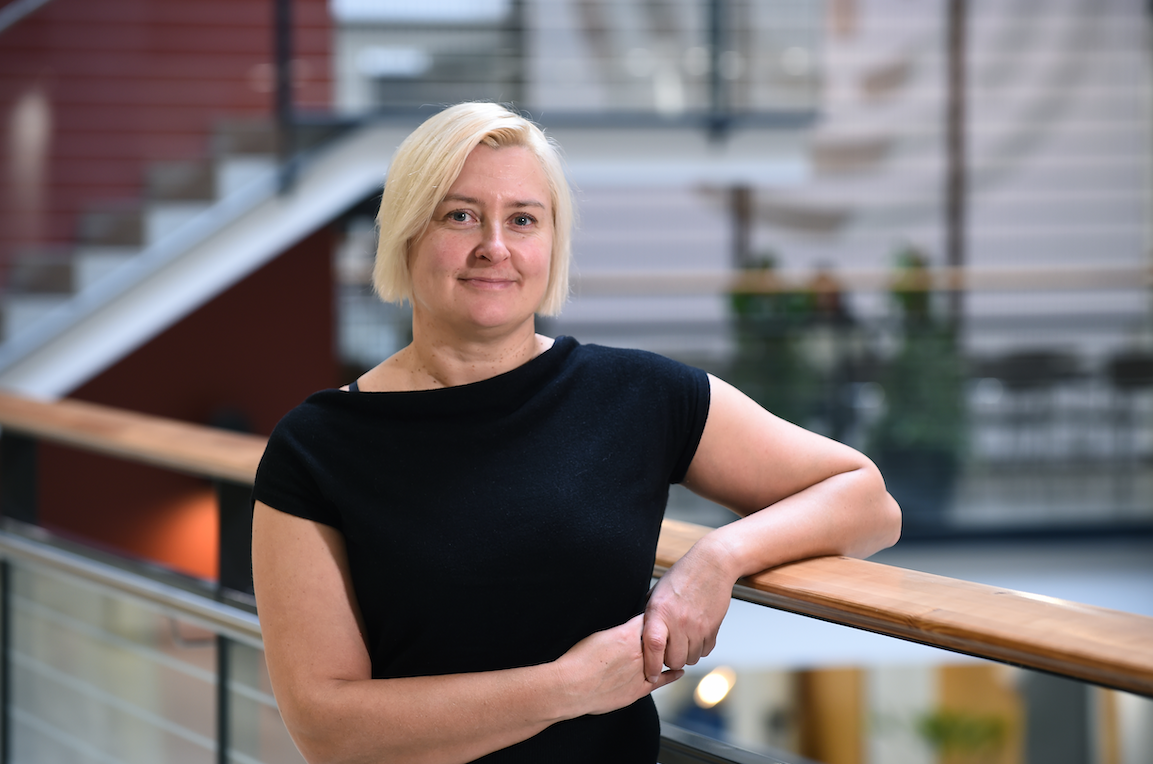
Pirta Hotulainen, leader of the Cellular Neuroscience research group at the Minerva Foundation Institute for Medical Research, has dedicated much of her career to studying brain structure and plasticity. Today, a burning question sits on her desk: how do various inflammatory states leave their mark on our brains?
Hotulainen’s path to becoming a researcher began already in high school when a spark of interest in the natural sciences was ignited. Her studies in chemistry and biochemistry at the University of Helsinki eventually led her to Germany to complete her doctoral thesis.
– It is beneficial for a researcher to move within the international field. It diversifies one’s expertise and broadens perspectives, Hotulainen reflects. After years spent in Munich and Münster, she returned to Finland as a postdoctoral researcher at the University of Helsinki’s Institute of Biotechnology. The inspiration for her current research focus actually began with a casual coffee table conversation.
A long journey into dendritic spines
For 15 years, Hotulainen has studied neuronal branches, dendrites, and the spines located upon them. These microscopic structures play a critical role, as they are the conduits through which information travels from one neuron to another.
– When we learn something new, neurons are activated, and each new spine stores a single memory. If you learn a new skill, you might gain, for example, five new spines, Hotulainen explains.
However, the brain is plastic: connections are formed, but they are also pruned. If the brain is not used, neglected spines are removed. This process is particularly pronounced in Alzheimer’s disease. Chronic stress is also ‘poison’ for these spines, as it leads to a reduction in their number.
Can we promote the well-being of our spines and our overall brain health? Hotulainen’s message is clear: the brain needs constant exercise and challenges. While modern tools like AI and GPS are convenient, we must not let them do all the thinking for us.
– All new learning is beneficial, but versatile motor activities, in particular, activate the brain extensively. For example, dance and music are excellent forms of ‘brain gymnastics’. They combine hearing, rhythm, memory, and coordination, Hotulainen notes.

Inflammation’s impact on the brain
Recently, Hotulainen’s research group has focused on how bodily infections and inflammatory states affect the brain. Interest in the subject dates back to the pandemic, when it was observed that COVID-19 caused acute and severe neurological symptoms in some patients.
The research group has studied, among other things, the effects of arthritis on the brains of mice. The results have been striking: systemic inflammation in the body makes brain cells more hyper-vigilant and alters behavior; for instance, it has been shown to increase anxiety.
– It appears that the brain learns to adapt to inflammation and may react even more aggressively the next time. Repeated, severe inflammatory states may be a contributing factor to the onset of neurological diseases, such as Alzheimer’s, Hotulainen says. Women, in particular, seem to be more susceptible to changes caused by inflammation due to differences in immune response.
Research is teamwork
At the Minerva Foundation Institute for Medical Research, Hotulainen leads a research group consisting of Master’s students, doctoral researchers and research assistants. The work involves a diverse mix of problem-solving, grant writing, and data analysis. While scientific research requires precision and deep focus, Hotulainen emphasizes the importance of open dialogue:
– New connections and research topics are often born in informal situations through conversation. In science, you must be able to listen to others to find new perspectives and create something new together.

