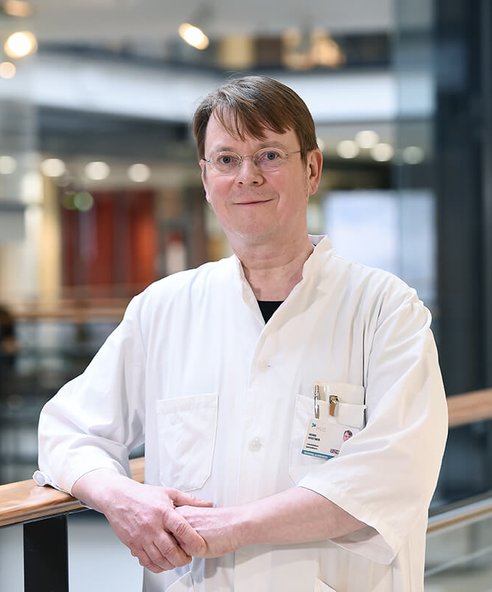
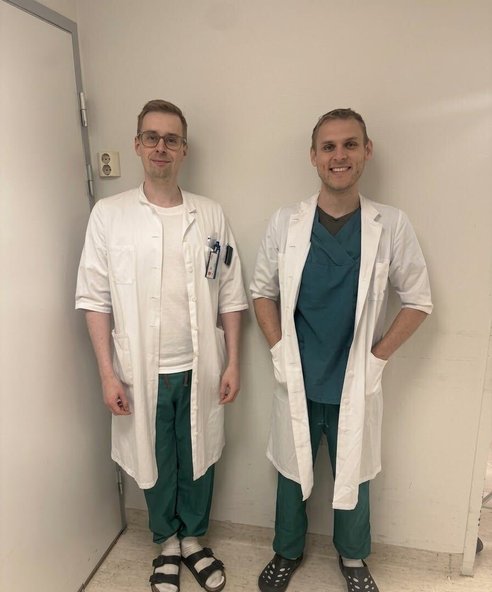
Radiologists Jussi Inkeri and Aleksi Tarkkonen study diabetes-related vascular changes at the Minerva Foundation Institute for Medical Research. Both completed their doctoral research in the Cardiovascular and Renal Diseases in Diabetes research group, led by Daniel Gordin. Their studies have revealed new and interesting findings, but have also raised questions that remain unanswered.
Inkeri and Tarkkonen took slightly different paths into research. Inkeri was inspired by his supervisors to join the research group, while Tarkkonen was looking for a research topic that combined an interesting, forward-looking field with the potential to improve health.
“Type 1 diabetes is a serious disease that, despite advanced treatments, leads to a shorter life expectancy and increased morbidity. Research in this field therefore also has the potential to deliver significant health benefits,” says Aleksi Tarkkonen.
What can the carotid arteries and eyes tell us about the brain’s blood vessels?
Jussi Inkeri’s research was prompted by a previously published finding from the FinnDiane study: a surprisingly large number of relatively young people with type 1 diabetes, who had no neurological symptoms, showed signs of cerebral microbleeds. In his doctoral thesis, Inkeri investigated the links between arterial structure and function, long-term exposure to elevated blood glucose levels, and changes in the brain’s small blood vessels.
In his first sub-study, he compared the thickness of the carotid artery wall with microbleeds visible on brain MRI scans. A link was found: microbleeds were more common in people with thicker carotid artery walls. The association remained even after long-term blood glucose control was taken into account.
“The thickness of the carotid artery wall can easily be measured using ultrasound. It would be interesting to investigate whether such a measurement could also provide information about the risk of changes in the brain’s small blood vessels,” Inkeri says.
In Aleksi Tarkkonen’s research, the focus shifted to the retina. Almost everyone with type 1 diabetes develops signs of diabetic eye disease within the first 30 years of living with the condition. They also face an increased risk of cerebrovascular disease. The small blood vessels in the retina and brain share several characteristics, meaning that changes in the retina may also provide clues about the condition of the brain’s blood vessels.
“In my study, changes in retinal vessel diameter were associated with changes in the brain’s small blood vessels, even before diabetic eye disease had progressed to an advanced stage. In addition, over a follow-up period of approximately 7.5 years, the prevalence of changes in the brain’s small blood vessels nearly doubled. Their progression was associated with glycaemic control and the duration of diabetes. It is not yet known whether tighter diabetes management could prevent these changes from developing or progressing,” Tarkkonen explains.
Even a negative finding matters
Inkeri’s studies found no association between long-term glycaemic control and either carotid artery wall thickness or cerebral microbleeds.
“Not finding an association can also be an important result. It means we need to consider what is actually causing the phenomenon,” Inkeri says.
In Tarkkonen’s follow-up study, by contrast, glycaemic control at baseline was associated with the progression of changes in the brain’s small blood vessels. The findings raise further questions about what other factors contribute to these vascular changes.
The results do not yet directly change how type 1 diabetes is treated. However, in the future, they may help clinicians assess the risk of vascular changes in the brain, for example, by examining the retina or carotid arteries. Further research is needed to determine whether the changes identified through these examinations can be prevented or their progression slowed.
Research alongside clinical practice
Both Inkeri and Tarkkonen have conducted research alongside their clinical work, often in the evenings, at weekends and during holidays. Both emphasise the importance of their research group and multidisciplinary collaboration.
“No one can carry out this kind of research alone. It takes a team with a broad range of expertise and highly motivated people,” Tarkkonen says.
The newly graduated doctors encourage other physicians to consider getting involved in research, too.
“Doing research also changes how you approach your own work as a doctor. It influences, for example, how you read clinical guidelines and think about patient care. You learn to read scientific articles more critically, and it becomes easier to identify their central message.”