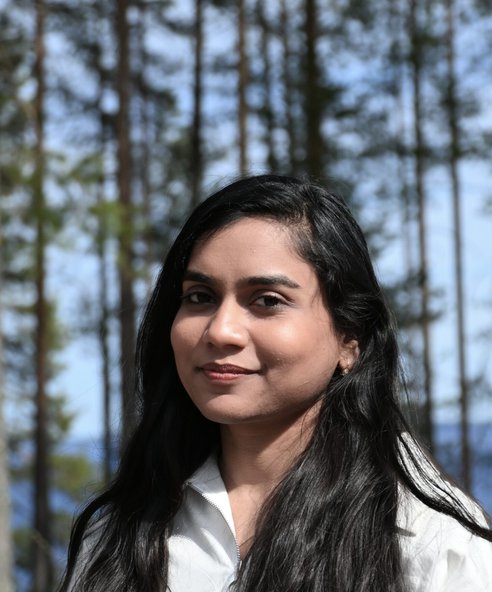
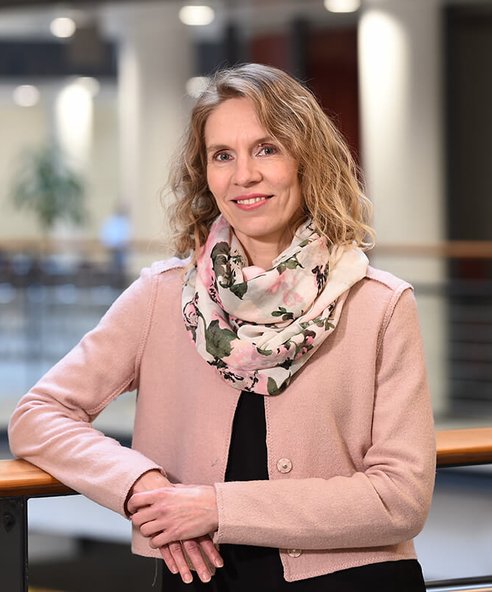
Miina Ollikainen has been appointed Associate Professor of Genetics at the University of Helsinki. She currently leads a research group at the Minerva Foundation Institute for Medical Research, focusing on the epigenomics of complex traits.
The new position will allow Ollikainen to focus on advancing the entire field of research and training the next generation of researchers.
“I have been studying human genetics, epigenetics and twins for a long time. Gradually, my research has expanded from individual biological mechanisms to a broader question: why do people differ in their health, disease risk and ageing?” Ollikainen explains.
In her new professorship, she will have the opportunity to shape the research environment that the next generation of researchers will encounter. This is a role particularly close to her heart, as she has always valued the opportunity to train and support new researchers at different stages of their careers.
The position also includes responsibility for developing the genetics education at the Faculty of Medicine.
“Genomics and genetic information have advanced enormously, and I want to help ensure that future doctors and other healthcare professionals have the skills and knowledge to understand and make use of this information.”
Building on Finland’s strong tradition of twin research
A highly established research environment in human genetics and genomics has developed at the University of Helsinki’s Meilahti Campus. In her new role, Ollikainen will work across the University of Helsinki, the Institute for Molecular Medicine Finland (FIMM) and the Minerva Foundation Institute for Medical Research. She hopes to bring together the expertise of these three institutions even more seamlessly in the future. Strengthening collaboration with the international research community is also among her goals.
“I hope to create new opportunities for collaboration, which can also help us secure research funding. At the same time, I want to highlight the high-quality research that is already being carried out here,” Ollikainen says.
“I consider my growing responsibility for the future of Finnish twin research particularly important. Finland has a strong tradition in twin research, and I want to build on that tradition while also renewing it.”
The same degree of obesity, different consequences
Ollikainen’s research focuses particularly on the health effects of obesity and ageing. The same degree of obesity does not lead to the same health problems in everyone, and people age biologically at different rates.
“I want to understand how genetics, the environment and lifestyle together shape our health,” Ollikainen says.
Twin research is a valuable tool in this work. Although identical twins have almost identical genetic makeups, their lifestyles and health can diverge over time. By comparing twins, researchers can better investigate which factors explain the differences between individuals. Multi-omics approaches are used to explore the molecular processes underlying these differences.
In the long term, the research findings may also benefit patients.
“Body weight alone does not tell us everything about a person’s health. The same degree of obesity can pose a much greater risk to one person than to another,” Ollikainen says.
A better understanding of the underlying causes of these differences may eventually make it possible to identify individual health risks more accurately, and thus make it possible to tailor prevention and treatment more precisely. The goal is to move beyond population-level risk assessments towards a better understanding of each individual’s biological profile. However, Ollikainen is keen to remain realistic: before research findings can be applied in clinical practice, they must prove to be reproducible and medically relevant.
Minerva is more than a workplace
Ollikainen will continue to lead her research group at Minerva alongside her new professorship. She highlights Minerva’s importance as an environment where research can flourish and new forms of collaboration can take shape.
“Minerva’s strength lies in its warm and close-knit community, where people know each other and help is always readily available. This applies to research group leaders, researchers and other staff alike. Minerva’s leadership genuinely wants to support people’s work, professional development and career progression,” Ollikainen explains.
“I also appreciate how smoothly things run at Minerva and how little administrative bureaucracy there is. This makes a real difference in a researcher’s everyday work: when practical matters are handled flexibly and support is easy to access, more time and energy can be devoted to the research itself and to working with people.”